

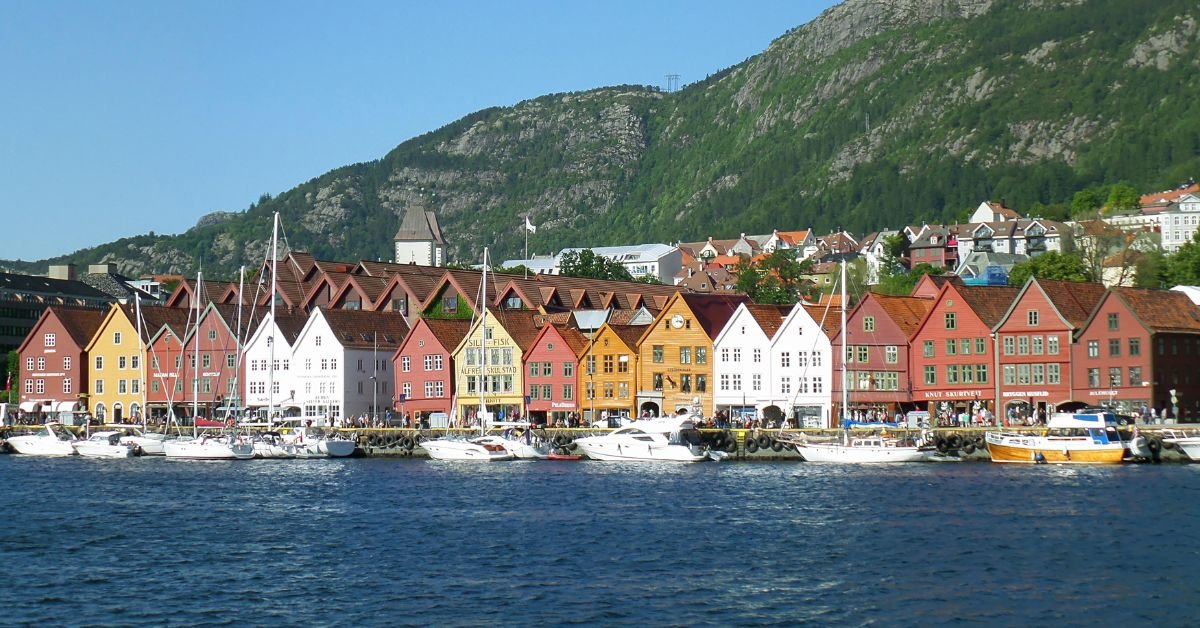
Bergen is often called the gateway to the fjords, and once you set foot here, it’s easy to see why. Surrounded by mountains and deep blue waters, the city blends history, culture, and stunning landscapes in a way few other destinations can. If you’re planning your trip, you’re probably wondering about the best things to do in Bergen Norway. This guide will walk you through iconic landmarks, fascinating museums, fjord cruises, and local food experiences so you don’t miss a thing.
Bergen is not just about sightseeing, it’s about atmosphere. Wooden houses lean into narrow cobblestone streets, music drifts from lively squares, and the smell of freshly caught fish fills the air near the market. Moreover, the city feels cozy despite being Norway’s second largest, making it perfect for both short city breaks and longer adventures. To help you plan, let’s begin with the historic heart of Bergen.
Explore Bryggen – Bergen’s UNESCO World Heritage Site
A trip to Bergen wouldn’t be complete without taking in the city’s most well-known neighborhood, Bryggen. Since Northern Europe’s trade was dominated by the Hanseatic League, this vibrant row of wooden buildings has stood along the old quay. Although many of the buildings you see today are reconstructions after fires, they faithfully reflect the medieval style and atmosphere that once defined Bergen’s importance as a trading hub.
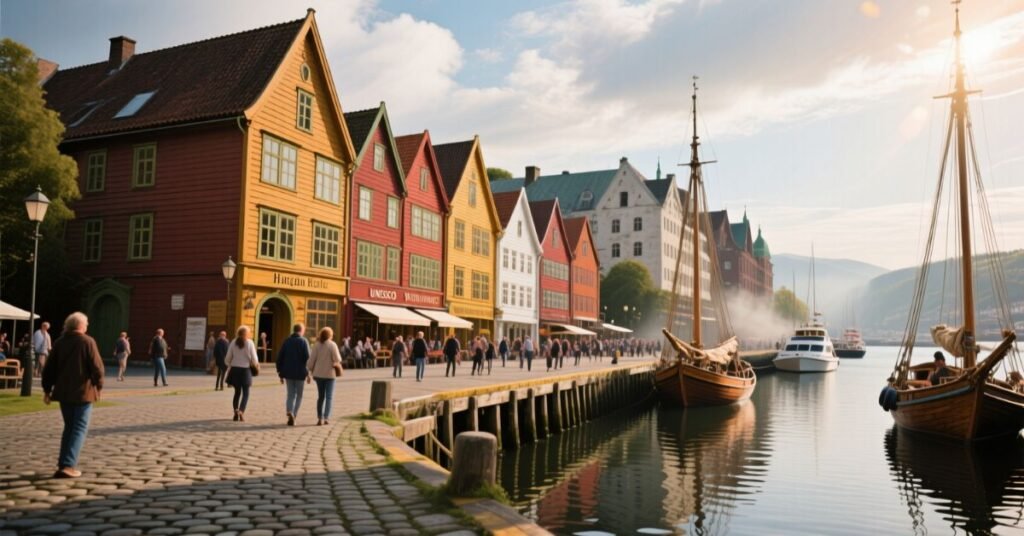
Walking through Bryggen feels like stepping into a living museum. Narrow alleyways lead you between tilted timber houses where art studios, cafés, and small shops now thrive. Each turn offers something new: handmade jewelry, traditional textiles, or even local artworks. Because the area has UNESCO World Heritage status, much of it has been carefully preserved, and you can almost imagine merchants unloading stockpiles of dried fish here centuries ago.
In addition, Bryggen is more than just a photogenic spot. You may learn more about the city’s past there as well. Guided walking tours bring the district to life, explaining not just the architecture but also the role Bergen played in global trade. If you arrive early in the morning, you’ll enjoy quieter streets and the chance to take in the details before the main rush of visitors arrives.
Visit the Hanseatic Museum and Schøtstuene
Just across from Bryggen, you’ll find the Hanseatic Museum and Schøtstuene, which offers an even closer look into Bergen’s past. This museum preserves the offices and meeting halls used by German merchants who settled in the city. Here, dried cod, known as stockfish, was stored, traded, and shipped across Europe.
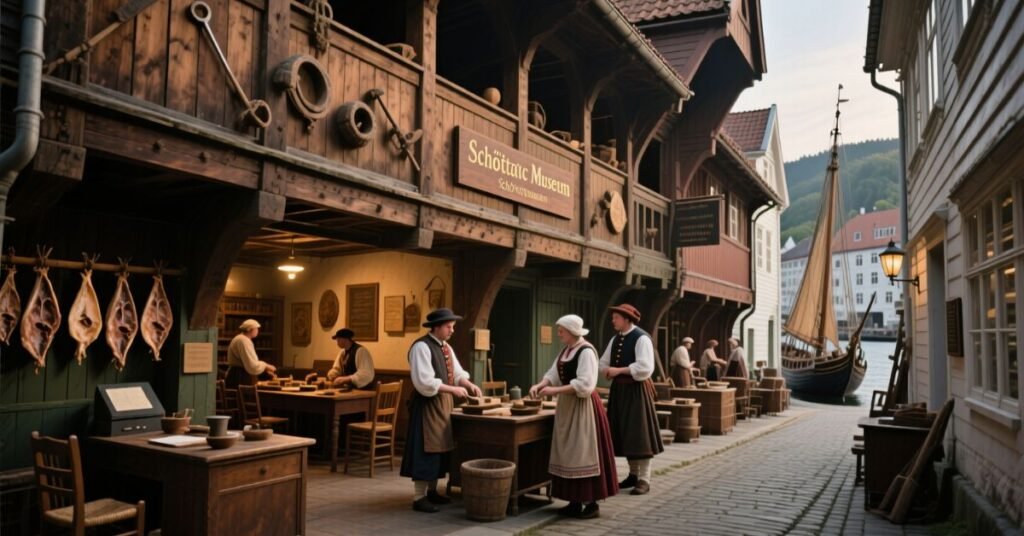
Inside, the atmosphere is intentionally kept dark and wooden, showing you how these traders actually lived and worked. Long tables, narrow bunk beds, and heavy timber beams reveal how harsh and disciplined life could be for a Hanseatic apprentice. As you walk through the rooms, you realize how much Bergen’s prosperity depended on the sea and the trade routes that linked it to distant markets.
The Schøtstuene, or assembly rooms, sit a short walk away and add another layer to the story. Merchants congregated in these gathering halls to celebrate and conduct business. Unlike the cramped museum building, the assembly rooms feel more spacious and decorated, reflecting their importance in maintaining community ties.
Visiting both sites together gives you context for the brightly painted Bryggen outside. It’s not just a beautiful row of houses; it’s a reminder of the merchants, apprentices, and traders who shaped Bergen into a city that still thrives today.
Ride the Fløibanen Funicular to Mount Fløyen
Taking the Fløibanen Funicular up to Mount Fløyen is one of the most well-liked activities in Bergen, Norway. The ride itself is only about six minutes, but it’s one of the most memorable experiences in the city. The funicular climbs steeply from the city center, and within moments, you’re gliding past houses clinging to the hillside with views opening up behind you.
From the top, the view of Bergen is breathtaking. You’ll see the city’s colorful rooftops, the harbor, and the surrounding fjords framed by rolling green hills. This viewpoint is perfect at any time of day, but if you can, come at sunset. The sky often lights up in soft pink and orange tones that reflect beautifully on the water.
Mount Fløyen is not just a viewpoint, though. There are hiking trails that start here, winding through pine forests and open meadows. Families love the playground and troll sculptures hidden along the paths, while adventurous visitors can rent bikes or kayaks nearby. Because it’s so close to the city, this is where locals often come for a quick escape from daily life.
How to Reach the Fløibanen Funicular Station
The station is easily found because it is situated in the heart of the city, close to the Fish Market and Bryggen. You can walk there in just a few minutes from most central hotels. Trains run frequently throughout the day, and tickets can be bought either at the station or online in advance. If you’re visiting during the summer, booking ahead saves you from long lines.
Hike to Mount Ulriken for Panoramic Views
If Fløyen feels too close to the city, then Mount Ulriken is your chance to enjoy Bergen’s wilder side. At 643 meters, it is the tallest of the seven mountains that encircle the city. Hiking up to the summit takes around two hours, depending on your pace, but the effort is rewarded with sweeping views that stretch across fjords, islands, and peaks.
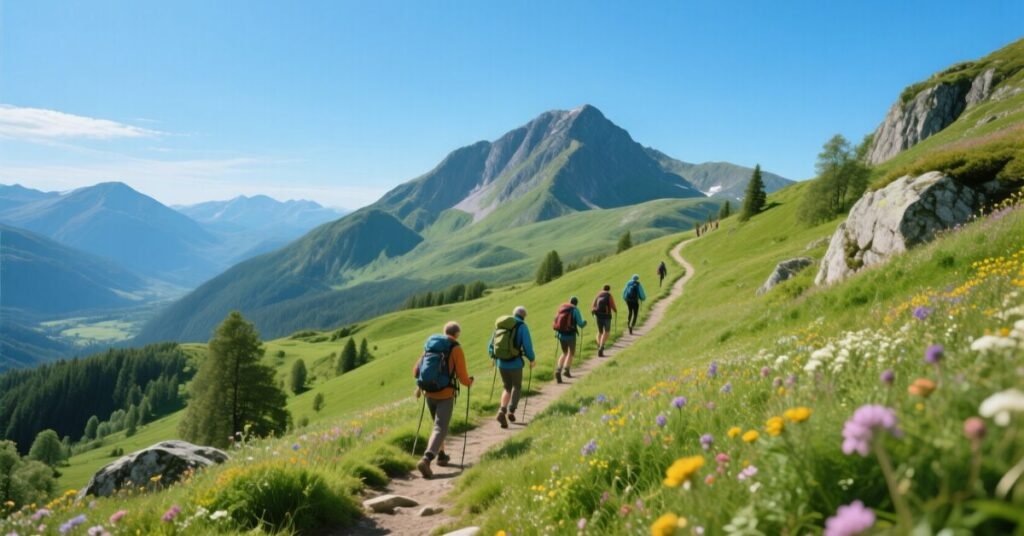
The trail is well marked, though it can be steep in places, so sturdy shoes and water are essential. Along the way, you’ll pass open moorland dotted with sheep and small lakes where you can pause to rest. Because the landscape is more rugged than Fløyen, it feels less crowded and more like an authentic mountain hike.
If you don’t want to hike the entire way, there’s another option: the Ulriken Cable Car. It takes you straight to the top in just a few minutes, allowing you to enjoy the view without breaking a sweat. Many visitors combine the two by hiking up and taking the cable car down, which makes for a perfect day out.
Here’s a quick comparison of the two options:
| Option | Duration | Difficulty | Experience | Best For |
| Hiking | 2–3 hours | Moderate to challenging | Scenic trails, exercise, closer to nature | Active travelers |
| Cable Car | 7 minutes | Easy | Instant panoramic views, no effort needed | Families, short visits |
Both ways offer something unique, so the choice depends on how much time and energy you want to spend. Either way, standing on Mount Ulriken’s peak is one of the unforgettable things to do in Bergen Norway.
Go on a Mostraumen Fjord Cruise
When you go on a cruise, it becomes evident why Bergen is known as the entry point to the fjords. The Mostraumen Fjord Cruise is one of the most popular trips because it gives you a taste of Norway’s dramatic landscapes without requiring a long journey from the city. Boats depart directly from Bergen’s harbor and sail deep into narrow fjords where cliffs rise straight from the water.
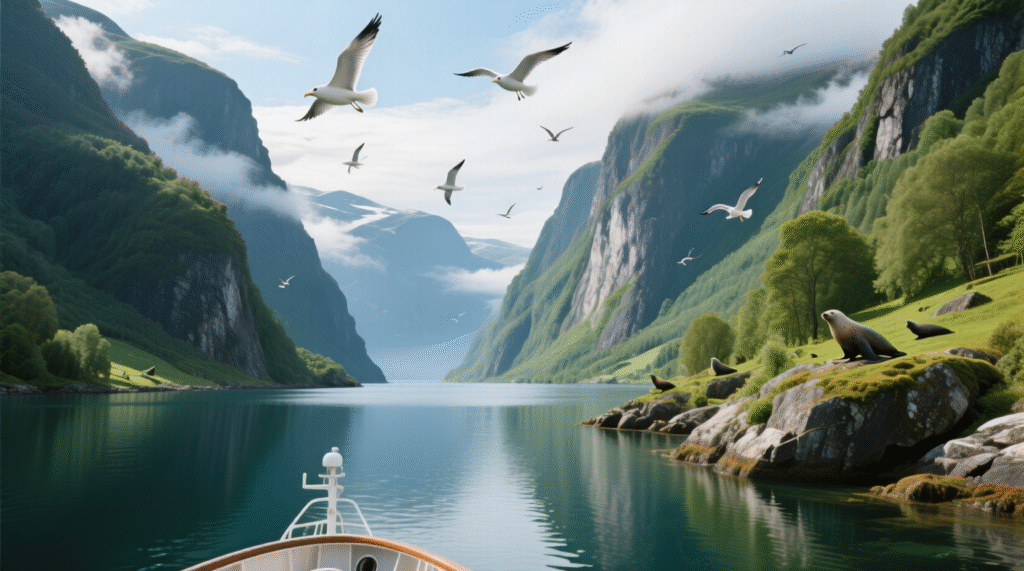
During the trip, you’ll pass waterfalls tumbling into the fjord, spot small farms clinging to impossible slopes, and often see seabirds gliding overhead. Some cruises even sail close enough to waterfalls that you can feel the mist on your face. The weather affects the atmosphere; on sunny days, the sea sparkles a vivid blue, but on overcast days, the fjord feels enigmatic and gloomy.
Mostraumen Fjord Cruise Highlights
One of the highlights is sailing past the narrow straits where the fjord closes in so tightly that you feel you could almost touch both sides. The captain usually slows the boat here so passengers can take photos and enjoy the scale of the cliffs. Another highlight is spotting wildlife; seals sometimes bask on the rocks, and if you’re lucky, you might even see a porpoise breaking the surface.
The full trip lasts about three hours, making it easy to fit into your schedule even if you’re only in Bergen for a couple of days. Warm clothing is recommended because the wind on deck can be chilly, even in summer. Still, there’s something magical about standing outside as the boat glides deeper into the fjord. It’s one of those moments that makes you understand why Norway’s landscapes are admired worldwide.
Take a Day Trip to Hardangerfjord or Sognefjord
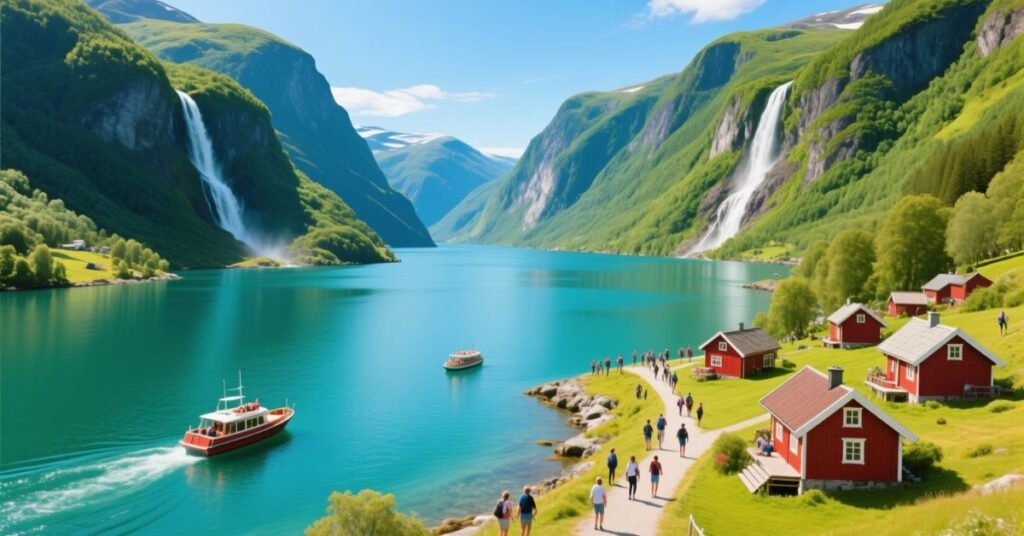
While Bergen itself is full of attractions, one of the best things to do in Bergen Norway, is to use the city as a base for exploring nearby fjords. Two of the most famous are Hardangerfjord and Sognefjord, each offering a different experience.
Because of its fruit orchards, Hardangerfjord is frequently referred to as the “Orchard of Norway.” In spring, the valley bursts into color when apple and cherry trees bloom, and in summer, you can taste cider made from local apples. Alongside the cultural side, the landscape is equally stunning: dramatic cliffs, deep blue water, and iconic waterfalls like Vøringsfossen that thunder into the valleys below.
On the other hand, Sognefjord is Norway’s longest and deepest fjord, stretching more than 200 kilometers inland. It feels endless, with side branches that lead to charming villages, glaciers, and towering peaks. Many travelers choose to combine a Sognefjord trip with visits to Flåm or the Nærøyfjord, which is a UNESCO World Heritage Site. Whether you prefer hiking, kayaking, or simply admiring the scenery from a boat, both fjords offer unforgettable adventures.
Taking a day trip means starting early, as tours last most of the day. But the effort is worth it. Standing on a deck with fjord walls rising hundreds of meters above you is the type of memory that stays for a lifetime.
Discover Bergenhus Fortress, Rosenkrantz Tower & Håkon’s Hall
Back in Bergen, history comes alive at the Bergenhus Fortress, one of the oldest and best-preserved fortresses in Norway. Its origins stretch back to the 13th century, and walking through its gates feels like stepping into a different time.
The most famous building inside the fortress is Håkon’s Hall, a medieval stone hall built for King Håkon Håkonsson. Once used for royal banquets and ceremonies, it remains a remarkable example of Gothic architecture in Scandinavia. Not far away stands the Rosenkrantz Tower, which combined a residence, fortress, and defensive tower in the 16th century. Climb to the top and you’ll be rewarded with views of the harbor and the city beyond.
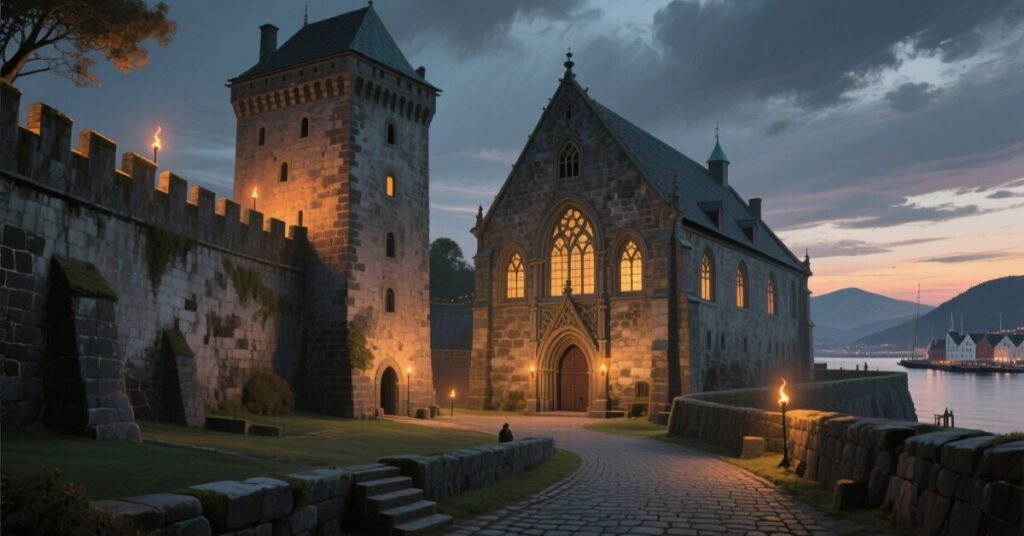
These sites show Bergen’s centuries-long function as a hub of trade and authority. The fortress also has peaceful gardens where you can rest after exploring. If you enjoy history, don’t miss this site,it adds depth and character to your visit, showing how Bergen balanced its role as both a cultural and military center.
Explore KODE Art Museums and Composer Homes
Art lovers will find Bergen surprisingly rich in cultural treasures. The KODE Museums make up one of the largest collections of art, design, and music in Scandinavia. Spread across several buildings, the museums display everything from classical paintings to modern installations, offering something for every taste.
One of the attractions is the collection of works by Edvard Munch, the Norwegian artist well known for The Scream. But beyond famous names, you’ll also find decorative arts, historical furniture, and temporary exhibitions that showcase international creativity.
Equally fascinating are the composers homes connected to KODE, including those of Edvard Grieg, Harald Sæverud, and Ole Bull. Visiting these houses lets you step into the lives of Norway’s greatest musicians, surrounded by the landscapes that inspired their compositions. Many homes also host concerts, creating a magical link between past and present.
For anyone with even a passing interest in art or music, this is one of the most enriching things to do in Bergen Norway. It proves that the city isn’t just about nature and history,it’s also a hub for creativity and culture.
Relax at Nordnes Sjøbad – Seawater Pool and Sauna
After days filled with hiking, sightseeing, and exploring museums, you might crave something a little different. One of the most refreshing things to do in Bergen Norway, is to visit Nordnes Sjøbad, the city’s open-air seawater pool and sauna.
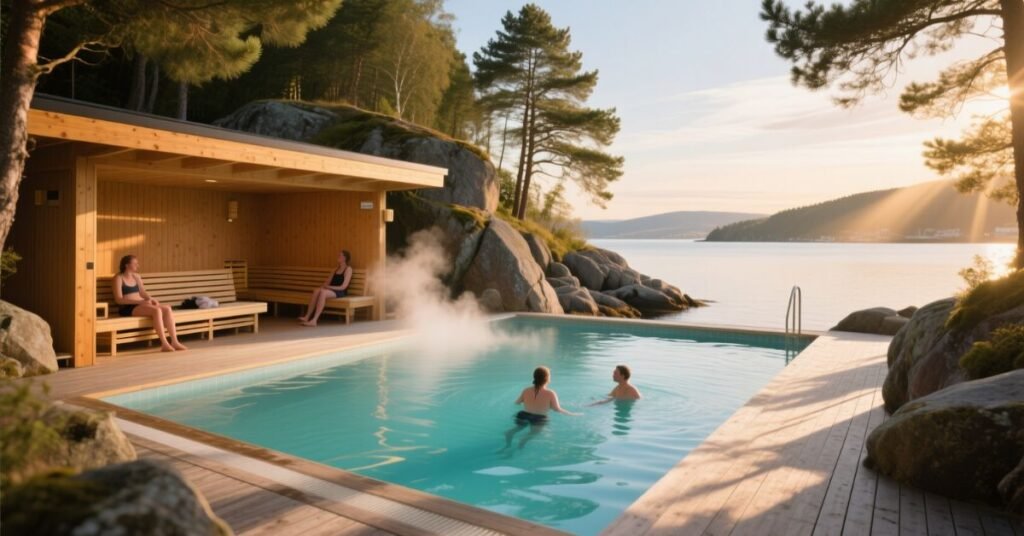
Located on a small peninsula just a short walk from the city center, this spot has been a local favorite since 1910. The pool is filled with seawater, heated to a comfortable temperature in the colder months, while the fjord itself remains chilly year-round. Brave swimmers often dip straight into the sea before rushing back into the warm pool or sauna,a classic Scandinavian tradition.
Visiting Nordnes Sjøbad isn’t just about swimming. It’s about experiencing Bergen like a local, enjoying the sea breeze, and relaxing in an environment that blends wellness with the natural beauty of the fjords. If you’re lucky enough to be there on a sunny day, the views over the water make the visit even more magical.
Visit Troldhaugen, the Home of Edvard Grieg
Music is deeply tied to Norway’s cultural heritage, and nowhere is this more evident than at Troldhaugen, the former home of composer Edvard Grieg. Just a short trip from Bergen’s city center, this villa overlooks Nordåsvannet Lake and offers an intimate look into the life of Norway’s most celebrated musician.
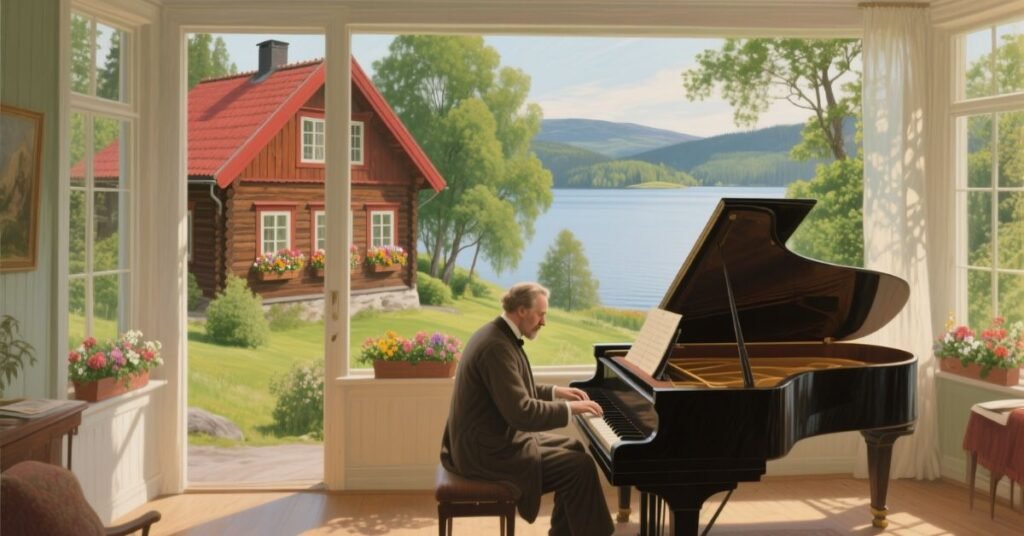
Grieg lived here with his wife Nina for over two decades, composing some of his most famous works in a small hut by the water. Today, the house is preserved as a museum, displaying his piano, personal belongings, and original interiors. Outside, visitors can wander through the garden paths or sit in the concert hall built into the landscape, where live performances bring his music to life in the very setting that inspired it.
For travelers seeking more than just sightseeing, Troldhaugen offers a deeper connection to Norway’s artistic spirit. Standing in Grieg’s composing hut, you can almost hear the echoes of his melodies carried on the breeze.
Experience Bergen’s Famous Fish Market
Few places capture Bergen’s identity like the Fish Market, located right by the harbor in the heart of the city. It has been a trading hub for centuries, where fishermen once sold their fresh catch straight from their boats. These days, it serves as a market and a bustling meeting spot for both locals and tourists.
You’ll find everything from fresh salmon, king crab, and shrimp to more adventurous options like whale meat. The vendors sell local cheeses, fruit, and pastries in addition to seafood. It’s not just a place to buy food,it’s an experience that reflects Bergen’s seafaring traditions and culinary culture.
To help you plan your visit, here’s a quick look at some popular foods and their average prices at the Fish Market:
| Food Item | Average Price (NOK) |
| Fresh Salmon | 150–200 per kg |
| King Crab | 500–700 per kg |
| Shrimp (ready to eat) | 100–150 per box |
| Whale Meat (seasonal) | 200–300 per portion |
| Local Cheese Selection | 80–120 per piece |
| Fresh Berries | 50–80 per box |
Trying these delicacies is one of the most enjoyable things to do in Bergen Norway, especially if you pair your meal with a view of the bustling harbor. Whether you sit down for a seafood platter at one of the restaurants or just grab a quick snack, the Fish Market offers flavors you’ll remember long after your trip.
Taste Local Food – From Trekroneren Hot Dogs to Fjåk Coffee
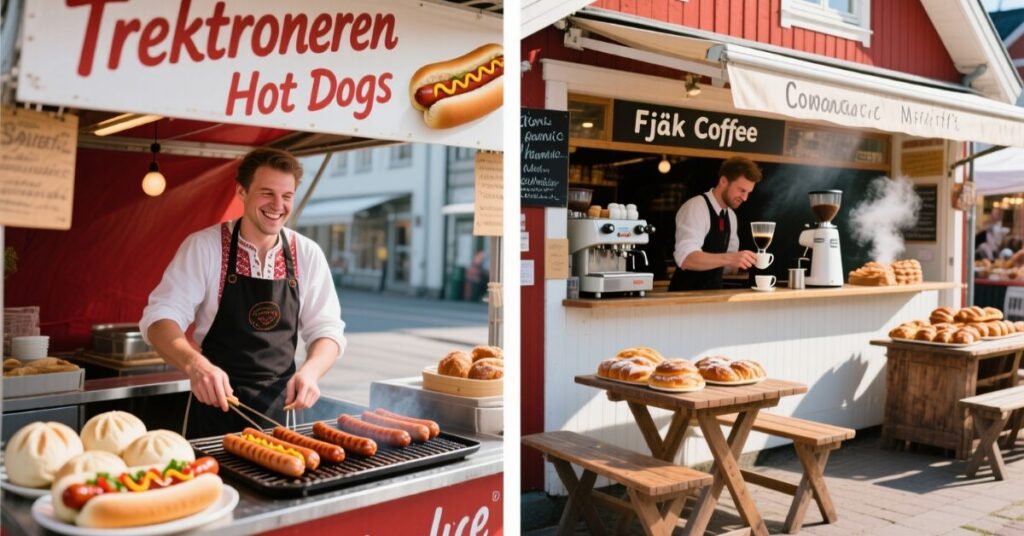
Bergen isn’t only about fjords and mountains; it’s also a paradise for food lovers. If you’re wondering about unique things to do in Bergen Norway, tasting local food should be high on your list. Start at Trekroneren, a legendary hot dog stand that offers more than 20 varieties of sausages, including reindeer, moose, and even vegetarian options. It’s quick, affordable, and beloved by both locals and tourists.
For something sweet, try Skillingsbolle, Bergen’s take on a cinnamon bun. Pair it with a cup of Fjåk coffee or craft chocolate from Norway’s first bean-to-bar chocolate maker, and you’ll feel like you’re experiencing the city’s flavors in their purest form. Beyond snacks, Bergen’s restaurants serve delicious seafood and farm-to-table dishes that reflect Norway’s natural bounty. Eating your way through the city is as memorable as hiking its mountains or sailing its fjords.
Enjoy Hiking Trails Around Bergen, Including Damsgårdsfjellet
Each of the seven mountains that round Bergen has hiking trails appropriate for hikers of various skill levels. One of the most rewarding hikes is Damsgårdsfjellet, often called Bergen’s “hidden gem.” Unlike Mount Fløyen or Ulriken, it’s less crowded, making it a peaceful escape with sweeping views of the city, fjords, and coastline.
If you’re short on time, you can choose smaller hikes close to the city, but for experienced hikers, longer trails connect multiple peaks in a single day. The best part is that no matter which trail you choose, you’ll always be rewarded with breathtaking scenery. Hiking is more than just exercise here; it’s part of Bergen’s lifestyle, a way to connect with nature and the local spirit.
Best Time to Visit Bergen and Practical Travel Tips
Deciding when to visit Bergen can shape your experience. Summers, from June to August, bring mild weather, long days, and lively festivals. Winter, on the other hand, offers cozy evenings, snowy hikes, and fewer crowds. Spring and autumn are quieter, with colorful landscapes and more affordable accommodation.
The following useful travel advice will help your vacation go more smoothly:
- Summer is peak season, so book hotels and fjord cruises early.
- Always pack a rain jacket, no matter the season,Bergen is famous for its showers.
- A Bergen Card can help you save money on buses and attractions, and public transit is reliable.
- Try mixing city attractions with day trips to fjords for a balanced experience.
- Norwegians value outdoor culture, so don’t hesitate to join locals in hikes or seaside swimming.
Visiting Bergen at the right time and planning ahead ensures you make the most of your journey. Whether you’re here for food, fjords, or culture, the city has something magical in every season.
Conclusion
Bergen is a city where history, culture, nature, and food come together in the most unforgettable way. From wandering through Bryggen’s UNESCO-listed wooden houses to hiking panoramic peaks and tasting local delicacies, the list of things to do in Bergen Norway is endless. Whether you’re here for a quick city break or a long adventure, Bergen welcomes you with charm, color, and unforgettable experiences.
FAQs
What is Bergen best known for?
Bergen is famous for its fjords, colorful Bryggen Wharf, fresh seafood, and surrounding mountains.
Is Bergen, Norway, worth visiting?
Yes, Bergen is one of Norway’s most beautiful cities with rich culture, fjord cruises, and outdoor adventures.
How many days do you need in Bergen?
2–3 days are ideal to explore the main attractions, but more time lets you enjoy fjord trips and hikes.
What food is Bergen known for?
Seafood, skillingsboller cinnamon buns, and Trekroneren hot dogs are Bergen specialties.
What is the best time to visit Bergen?
Summer is lively and sunny, while spring and autumn are quieter with fewer crowds.

I’m a passionate traveler with a knack for discovering hidden gems around the world, sharing real travel experiences, tips, and must-visit places to inspire your next adventure.